
Ecuador · Latin America
Moving to Machala
Machala quick facts
Ecuador at a glance
Latin America & Caribbean
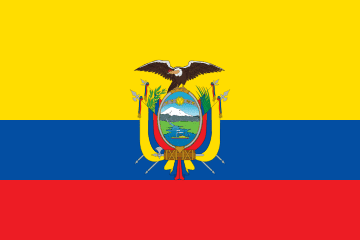
Economy
World Bank · 2025Religion
% of populationCIA World Factbook / national censuses
Cost of living in Machala
Can you move to Ecuador?
Pick your passport to see whether you can enter Ecuador — and what it takes to stay.
Entry rules come from github.com/imorte/passport-index-data, updated 17 February 2026. They change without notice — confirm with the official immigration service before booking.
Getting set up in Ecuador
Residence visas, the cédula, and living an hour from a land border
Ecuador grants temporary residence for two years, renewable, and permanent residence after 21 months of continuous temporary residence. Thresholds are multiples of the salario básico unificado, USD 482 for 2026 — three SBU, USD 1,446 a month, for the pensioner and rentista routes. Two things are specifically local. This is a provincial city with no foreign consulates, so anything needing your own country's mission means Guayaquil, about three hours north. And the Peruvian border is a little over an hour south, which makes it unusually easy to accumulate days against the absence limit without noticing.
Read the full step-by-step guideMovilidad Machala runs your car, the ANT runs your licence
Two governments touch your car. The licence is an ANT matter, national and identical everywhere, requiring a medical and psychosensometric assessment and — for most nationalities — a course and examination rather than a straight exchange. The vehicle is the municipality's: Movilidad Machala EP handles matriculación and the revisión técnica vehicular. Beyond the city, three roads matter — north to Guayaquil, south to the Peruvian border at Huaquillas, and east up into the hills towards Zaruma and Loja, which is a genuine mountain drive rather than a country lane.
Read the full step-by-step guideBanking in an export town, and the tax on money leaving
Ecuador uses the US dollar, which removes exchange risk, spreads and the whole apparatus of currency management. What it adds instead is the Impuesto a la Salida de Divisas on money leaving the country, and a banking culture conservative about opening accounts for people without a cédula. Machala's local character is agricultural trade finance — the banks here understand banana and shrimp cycles, harvest lending and export documentation because that is what the province does — set against a border-town compliance environment that makes anything unusual slower than it would be elsewhere.
Read the full step-by-step guideIESS, a municipal health network, and endemic dengue
Employees are enrolled in the IESS by their employer from the first day of work. Everyone else can affiliate voluntarily by declaring a contribution base and paying 17.60% of it, from USD 84.83 a month at the 2026 floor. On top of the two national systems, the Empresa Pública Red Municipal de Salud Machala EP runs municipal medical centres, mobile units, ambulances and specialist consultations priced on a solidarity scale of roughly USD 10 to 35. The dominant health facts here are otherwise the coast's: endemic dengue at sea level, non-potable water, and specialist medicine that lives in Guayaquil.
Read the full step-by-step guideClaro, Movistar, CNT — and a border that confuses your phone
Three mobile operators cover the market and SIM registration against an identity document is mandatory. Machala is flat, compact and dense, so the urban area is reasonably well covered and fibre competition in the residential districts is real — better than the Manabí beach towns and without Quito's hillside dead spots. Two local wrinkles: the January-to-April rains and flooding are hard on street-level infrastructure, and near the Peruvian border handsets will happily latch onto a Peruvian network and start roaming.
Read the full step-by-step guideWorldwide income, the RUC, and a municipality with its own gazette
Ecuador taxes its residents on worldwide income — the opposite of territorial neighbours like Costa Rica and Panama. Residence turns principally on days present. Employees are withheld at source; anyone invoicing needs a RUC, and smaller taxpayers may fall within the simplified RIMPE regime. Ecuador also levies the Impuesto a la Salida de Divisas on money leaving the country. Locally, the municipality runs so much of the city through its own public companies that its tax gazette is a document worth reading rather than an obscurity — and if your income touches the export trade, customs sits alongside the SRI.
Read the full step-by-step guideEach guide has verified costs, timelines, required documents, and the non-obvious gotchas — sourced from official government pages. Last verified August 2026.
Essential Spanish phrases
Reading a list isn’t learning it. Globe Quest turns these into a trainer — hear each phrase spoken, drill them with spaced repetition, and get scored as you say them out loud.
What to know before you go
El Oro's homicide rate doubled in a single year, and Machala is why
CriticalThe province recorded 42.1 homicides per 100,000 inhabitants in the first half of 2025 — the third-highest rate in Ecuador — and that was a 100% increase on the same period in 2024, one of the sharpest deteriorations anywhere in the country. Machala itself recorded 347 violent deaths in the eleven months to November 2025, the fourth-highest canton total, and climbed above Esmeraldas and Quito in the national ranking. Two things drive it and both are local: an export port on a cocaine route, and gold. El Oro has been mined since the colonial period and the recent expansion of illegal mining has opened new fronts of violence across Ecuador's mining provinces. None of this targets foreign residents, but a city getting rapidly worse behaves differently from one that is merely bad, and this is the fastest-deteriorating place in this set by a wide margin.
Absence, not refusal, is what usually costs people their Ecuadorian residence
CriticalA temporary resident may be outside Ecuador for no more than ninety days in a year, counted cumulatively across the visa's validity rather than resetting on renewal. Permanent residents have historically faced a 180-day annual limit during their first two years. There is no warning letter and no grace, and it is how residence is most commonly lost in Ecuador. Machala's proximity to Peru makes this easier to breach than it sounds: a weekend across the border is a day of the count each way. The reforming law published on 24 October 2025 rewrote the article on losing permanent residence, so confirm the current wording before planning any extended trip, and keep a spreadsheet of every entry and exit from the day you land.
Hot, humid and low-lying — and 'invierno' is the hot half
CriticalMachala sits six metres above sea level on a delta of estuaries and old mangrove. Mean temperatures run roughly 22 to 29°C all year, with total rainfall of about 438 mm concentrated almost entirely between January and April — a wet season the coast confusingly calls invierno. It is more humid than Manta and without Manta's steady sea breeze, because the city sits behind the mangroves rather than on the open ocean, and air conditioning is a real and permanent line on the electricity bill. Low-lying delta ground also means the rains flood streets, so the district you choose matters more here than in a hillier city.
At sea level in the mangroves, the mosquito is a permanent resident
CriticalDengue is endemic on this coast and circulates year-round with a hard peak during the January-to-April rains; chikungunya and Zika share the vector. Estuary and shrimp-farm country with standing water everywhere is close to ideal habitat, and there is no altitude, no cold snap and no dry season deep enough to break the cycle. Screens on windows, repellent as a daily habit, long sleeves at dusk and nothing holding standing water on a balcony or in a water tank. Tap water is not drinkable — bottled or a proper filter, without exception.
The municipality runs more of daily life here than in any other city in this set
ImportantMachala's GAD operates an unusually deep set of its own public companies: Aguas Machala EP for water, Movilidad Machala EP for vehicle registration and the technical inspection, Mercados Machala for the markets, EMAMEP for waste, its own fire service — and, unusually for Ecuador, the Empresa Pública Red Municipal de Salud Machala EP, a municipal health network running primary-care centres, mobile units, ambulances and specialist consultations on a sliding scale of roughly USD 10 to 35. Practically that means the municipality's own portal and tax gazette matter more to your week here than the national ones, and it means there is a third health option alongside the IESS and the Ministry of Health that almost no newcomer knows exists.
This is a working export town, not a destination, and the beach is mangrove
Good to knowNobody moves to Machala for the scenery. It is flat, hot, commercial and organised around getting fruit, shrimp and metal onto ships. The weekend beach is Jambelí, across the channel by launch from Puerto Bolívar, and it is estuary and mangrove rather than the open Pacific — the proper surf coast is a long way north. What Machala does offer is genuinely low costs, real work in agro-export and logistics, a border an hour away and Guayaquil about three. Arrive with Spanish and a reason to be here, and it works; arrive expecting a coastal lifestyle city and it will not.
Top industries & employers
Bananas & agro-export
Grupo Wong, Reybanpac, Dole and Chiquita buying operations, and thousands of independent growers across El Oro
Machala calls itself the banana capital of the world and the description is close to literal — the surrounding province is one of the densest banana-growing regions on earth, and the trade, packing, financing and shipping of it is what the city does. The official minimum box price is set annually and dominates local politics every December.
Shrimp farming & processing
Camaroneras across the Jambelí estuaries, packing plants, feed and hatchery suppliers
Ecuador is one of the world's largest shrimp exporters and El Oro's estuaries and former mangrove flats are a core production zone. Shrimp is the province's second export and, alongside bananas, the reason the port and the cold chain exist.
Port, logistics & mineral export
Autoridad Portuaria de Puerto Bolívar, Yilport as concessionaire, freight forwarders and customs agencies
Puerto Bolívar is ten minutes from the city and is operated under concession by the Turkish group Yilport. It moves bananas, shrimp and — a newer and rapidly growing line — the great majority of Ecuador's copper exports, which has changed what the port is for within a decade.
Gold & mining services
Operators around Zaruma, Portovelo and Ponce Enríquez, plus equipment, assay and logistics firms in the city
The province is named for its gold and has been mined since the colonial period. It remains a real industry with a real supply chain in Machala — and the recent expansion of illegal mining is also, directly, part of why the province's violence has risen so sharply.
Cross-border trade
Customs agencies, hauliers and wholesalers working the Huaquillas crossing
Peru is a little over an hour south, and the Huaquillas–Aguas Verdes crossing is one of the busiest land borders on the Pacific coast of South America. Because Ecuador is dollarised and Peru is not, the price differential across that line drives a permanent legitimate trade and a permanent informal one.
Public sector & higher education
GAD Municipal de Machala and its public companies, GAD Provincial de El Oro, Universidad Técnica de Machala
The municipality is an unusually large direct employer because it runs water, mobility, markets, waste, fire and a municipal health network itself. UTMACH is the province's main public university and supplies most of the local professional workforce.
Where to go in Machala
Puerto Bolívar & the Malecón
Landmark · Ten minutes west of the centre, on the channel
The working port and the waterfront beside it — cranes, banana reefers and container stacks on one side, ceviche stalls and launches on the other.
Local tip: Go late afternoon, eat at the seafront stalls rather than in the restaurants, and watch the boxes go on. Watching a banana ship load is more interesting than it sounds and it is the single clearest explanation of what this city is for. The launches to Jambelí leave from here.
Archipiélago de Jambelí
Nature · Across the channel from Puerto Bolívar, by launch
A chain of low mangrove islands with a beach village on the seaward side — Machala's weekend, and a genuine estuary ecosystem rather than a resort coast.
Local tip: Take the public launch rather than a tour. Go on a weekday if you want it empty and at a weekend if you want it alive — those are two completely different places. The water is estuarine and brown rather than blue, and the point is the mangroves, the birds and the crab, not the swimming. Take repellent; you are going into their house.
Mercado Central & the Feria Mundial del Banano
Food · The centre; the fair in September
The city's produce and seafood market, and the annual world banana fair that takes over Machala at the end of September.
Local tip: The market is where you eat: bolón, encebollado, ceviche de concha and mangrove crab, all early and all cash. The banana fair in September turns the city into a trade show, a beauty pageant and a week-long street party at once, and hotel rooms vanish — either plan around it or plan for it, but do not book a quiet working week that month by accident.
Zaruma
Hidden gemCulture · Up in the hills, about two hours east of the city
A timber-built colonial gold-mining town clinging to a ridge at 1,200 metres, with wooden balconies, steep lanes and cool air.
Local tip: The single best day out from Machala, and a complete change of climate — you leave the humid delta and arrive somewhere with wooden houses and a breeze. The town has been mined under for centuries and subsidence is a real and publicly discussed problem, which is part of what makes it extraordinary. Try the tigrillo for breakfast and the local coffee, which is genuinely good.
Reserva Ecológica Manglares Churute
Hidden gemNature · North on the road to Guayaquil, about an hour and a half
One of Ecuador's largest protected mangrove systems, with dry forest hills rising behind it, howler monkeys and enormous birdlife.
Local tip: Take a boat through the channels rather than only walking the hill trail — the mangroves are the point, and from the water you see the crab gatherers working the roots the way they have for generations. Early morning, repellent, and a guide from the local community. It also explains, better than any museum, what the shrimp farms replaced.
Parque Central Juan Montalvo & the cathedral
Landmark · The city centre
The main square with its neo-gothic cathedral, the shaded heart of a city that otherwise has very little shade.
Local tip: Practical rather than romantic advice: this is where you sit out the worst of the afternoon heat, and it is where the city's civic life happens. The cathedral is a twentieth-century building in a city with almost no colonial fabric — Machala grew with the banana boom, so there simply is not an old town here. Knowing that saves you looking for one.
Emergency numbers in Machala
Compare Machala with…
Side-by-side cost of living, language, climate and careers — to help you choose.