
Ecuador · Latin America
Moving to Ambato
Ambato quick facts
Ecuador at a glance
Latin America & Caribbean
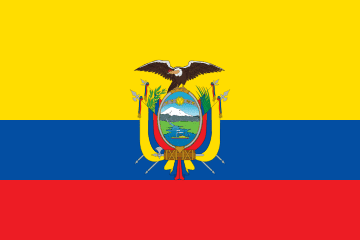
Economy
World Bank · 2025Religion
% of populationCIA World Factbook / national censuses
Cost of living in Ambato
Can you move to Ecuador?
Pick your passport to see whether you can enter Ecuador — and what it takes to stay.
Entry rules come from github.com/imorte/passport-index-data, updated 17 February 2026. They change without notice — confirm with the official immigration service before booking.
Getting set up in Ecuador
Residence visas, the cédula, and doing all of it in Spanish
Ecuador grants temporary residence for two years, renewable, and permanent residence after 21 months of continuous temporary residence. Thresholds are multiples of the salario básico unificado, USD 482 for 2026 — three SBU, USD 1,446 a month, for the pensioner and rentista routes. What is different about doing this from Ambato is the absence of the support infrastructure other Ecuadorian cities have: no foreign consulates, no expatriate advisory scene, and effectively no English at any counter. Against that, Quito is a little over two hours up the Panamericana, which is closer than any other city in this set.
Read the full step-by-step guideThree governments, one number plate
Your licence comes from the ANT, nationally, after a medical and psychosensometric assessment and — for most nationalities — a course and examination rather than a straight exchange. Your car is a local matter, and here that means two local authorities rather than one: the municipality runs the Unidad de Matriculación Vehicular and the technical inspection centre at Shuyurco, while the provincial government charges its own vehicle tax. The municipality is explicit that some of these payments must clear at a bank 48 hours before your appointment and others are paid at its own windows on the day.
Read the full step-by-step guideCooperative country: banking where the coops are the mainstream
Ecuador uses the US dollar, which removes exchange risk, spreads and the whole apparatus of currency management, and adds the Impuesto a la Salida de Divisas on money leaving the country. What is distinctive about Ambato is who holds the money. Tungurahua is the heartland of Ecuadorian cooperative finance — OSCUS, Mutualista Ambato, San Francisco, and several of the country's largest indigenous-founded cooperatives such as Mushuc Runa, Chibuleo and Kullki Wasi were all born in this province. Here the cooperatives are not an alternative to the banking system; for a large part of the population they are the banking system.
Read the full step-by-step guideIESS, altitude, and a volcano the state watches for you
Employees are enrolled in the IESS by their employer from the first day of work. Everyone else can affiliate voluntarily by declaring a contribution base and paying 17.60% of it, from USD 84.83 a month at the 2026 floor. Ambato's health picture is the sierra's: no mosquito-borne disease at 2,577 metres, altitude to adjust to, severe ultraviolet, and cold unheated buildings. The one local addition is Tungurahua volcano, quiet since 2016 but monitored continuously by the national geophysical institute, whose bulletins are the thing to read rather than rumour.
Read the full step-by-step guideClaro, Movistar and CNT in a valley city
Three mobile operators cover the market and SIM registration against an identity document is mandatory. Ambato is a compact valley city and the urban core is well served by fibre; what varies is the ground around it, because the city sits in a basin with parishes climbing the surrounding slopes to well over 3,000 metres. Coverage follows the valley floor and the main roads, and thins on the hillsides — the same pattern as Quito, on a smaller scale.
Read the full step-by-step guideWorldwide income, RIMPE, and a municipal gazette worth reading
Ecuador taxes its residents on worldwide income — the opposite of territorial neighbours like Costa Rica and Panama. Residence turns principally on days present. Employees are withheld at source; anyone invoicing needs a RUC. Ecuador also levies the Impuesto a la Salida de Divisas on money leaving the country. In a city of small workshops, market traders and family businesses, the question that matters most in practice is which regime you fall into — the general one or the simplified RIMPE — because that changes both the rate and how often you file.
Read the full step-by-step guideEach guide has verified costs, timelines, required documents, and the non-obvious gotchas — sourced from official government pages. Last verified August 2026.
Essential Spanish phrases
Reading a list isn’t learning it. Globe Quest turns these into a trainer — hear each phrase spoken, drill them with spaced repetition, and get scored as you say them out loud.
What to know before you go
Three tiers of government tax your car here, and only one of them is the one you have heard of
CriticalAmbato does not have a separate municipal transit company the way Guayaquil, Cuenca, Manta and Machala do — the municipality runs vehicle registration itself through a Unidad de Matriculación Vehicular, with the technical inspection centre out at Shuyurco. On top of that, the Gobierno Provincial de Tungurahua levies its own vehicle tax. The municipality is explicit about the sequence: the matrícula and the provincial tax are paid at authorised banks at least 48 hours in advance, while the municipal rodaje, the inspection fee and the sticker are paid at the municipality's own windows on the day of the appointment. Turn up having paid only some of it and you will be sent away. This is a genuinely different procedure from any other city in Ecuador and no national guide describes it.
Absence, not refusal, is what usually costs people their Ecuadorian residence
CriticalA temporary resident may be outside Ecuador for no more than ninety days in a year, counted cumulatively across the visa's validity rather than resetting on renewal. Permanent residents have historically faced a 180-day annual limit during their first two years. There is no warning letter and no grace, and it is how residence is most commonly lost in Ecuador. The reforming law published on 24 October 2025 rewrote the article on losing permanent residence, so confirm the current wording before planning an extended trip. Keep a spreadsheet of every entry and exit from the day you land.
This is a working city, not a destination — arrive with Spanish
CriticalAmbato has almost no foreign community. There is no Gringolandia, no English-speaking lawyer on every corner, no expatriate Facebook group that will translate a municipal form for you. What there is instead is a manufacturing and wholesale economy, two good universities and prices to match — which is exactly why it suits people who want to live in Ecuador rather than in an enclave. But it means functional Spanish is not an aspiration here, it is a prerequisite, and every piece of advice written for Cuenca about English-speaking services is simply inapplicable.
The driest sierra city: about 480 mm of rain a year, and freezing at night
ImportantAmbato sits at 2,577 metres in a rain shadow and receives roughly 480 mm of rain a year — a fraction of what falls on Cuenca or Quito, and the reason the valley grows fruit. Daytime highs run around 19 to 23°C in strong sun; night-time lows sit around 8 to 10°C. As everywhere in the Ecuadorian sierra there is no heating in any building you will rent, and the swing between a hot midday and a cold evening is the thing people underestimate. Layers, a proper duvet and a flat that faces the sun are the local answers, and the ultraviolet at this altitude on the equator is severe even when the air is cold.
The city you see is a rebuilt one, and 1949 explains it
Good to knowOn 5 August 1949 an earthquake killed more than six thousand people and destroyed much of Ambato, including the colonial cathedral. What went up in its place was modernist — the replacement cathedral opened in 1954 — which is why a visitor arriving from Cuenca or Quito finds a sierra city with almost no colonial centre and wonders what happened. The Fiesta de la Fruta y de las Flores was created the year after the earthquake, in 1950, explicitly as an act of civic recovery, and is now the largest festival in the central sierra. Knowing this turns the city from architecturally disappointing into something considerably more interesting.
There is a volcano thirty kilometres away and a national institute that watches it
Good to knowTungurahua, which gives the province its name, was in an eruptive period from 1999 to 2016, and ashfall reached Ambato repeatedly during it. It has been quiet for years, and nothing about living here requires anxiety — but the sensible local habit is to know that the Instituto Geofísico of the Escuela Politécnica Nacional publishes the monitoring, to know what light ashfall means for a car's paintwork and for anyone with a respiratory condition, and to keep a dust mask somewhere. Baños, at the foot of the volcano and an hour away, is the weekend destination for the whole province, and its evacuation history is worth reading before you go.
Top industries & employers
Vehicle bodywork & metalworking
Carrocerías Patricio Cepeda, Imce, Varma, Miral, Serman, and dozens of smaller talleres
Ambato builds bus and lorry bodies onto imported chassis and supplies most of the country's public transport fleet. It is the largest concentration of this industry in Ecuador and the single most distinctive thing about the local economy — a genuine manufacturing cluster in a country with few.
Leather, footwear & textiles
Tanneries and jacket workshops in Quisapincha, Plasticaucho (Venus footwear), textile firms across the valley
Tungurahua is Ecuador's leather and footwear province. Plasticaucho is one of the largest footwear manufacturers in the Andean region, and Quisapincha up the hill is a whole parish of tanneries selling direct. Much of it is small-workshop production rather than factory scale.
Wholesale produce & agro-trade
Mercado Mayorista de Ambato, EP-EMA, and the trader networks across Tungurahua, Cotopaxi and Chimborazo
Ambato is the clearing house for the central sierra's fruit and vegetables — the reason it is called the city of fruits and flowers and the reason groceries are the cheapest of any city in this set. The wholesale market is one of the largest in the country.
Cooperative finance
OSCUS, Mutualista Ambato, San Francisco, Mushuc Runa, Chibuleo, Kullki Wasi
Tungurahua is the heartland of Ecuadorian cooperative finance and the birthplace of several of the country's largest indigenous-founded cooperatives. They are supervised by the SEPS rather than the banking superintendency, and in this province they are the mainstream rather than the alternative.
Higher education
Universidad Técnica de Ambato, PUCE sede Ambato, Universidad Indoamérica
The Universidad Técnica de Ambato is one of the larger public universities in the sierra and supplies engineering and food-technology graduates directly into the local manufacturing base. Students are a visible part of the city's population and its rental market.
Logistics & the central corridor
Freight operators, distribution warehouses, and the workshops along the Panamericana
Ambato sits on the main road spine of the sierra roughly midway between Quito and Cuenca, with the road down to the Amazon through Baños and Puyo starting here. That crossroads position is why the wholesale market and the distribution economy exist where they do.
Where to go in Ambato
Mercado Mayorista
Food · South-east of the centre, off the Panamericana
The wholesale produce market for the central sierra — acres of fruit and vegetables changing hands before dawn, three days a week at full tilt.
Local tip: Go very early, on a Monday, Wednesday or Friday, and go to look before you go to buy. It is a working trading floor rather than a tourist market and it is genuinely startling in scale. Then go to the retail markets — the Mercado Modelo or Urbina — for the food counters and llapingachos, which is where you actually eat.
Quinta de Juan León Mera & the Ficoa quintas
Culture · Ficoa and Atocha, along the Ambato river below the city
The nineteenth-century country houses and gardens of Ambato's writers, in a strip of orchard and flower nursery along the river.
Local tip: The quintas of Mera — who wrote the words of the national anthem — and of Juan Montalvo are the calmest hour in Ambato, and the walk along the river between them through the orchards is the reason people live in Ficoa. Go on a weekday morning; the gardens are the point rather than the houses.
Quisapincha
Neighborhood · Up the western hillside, about 20 minutes from the city
An entire parish of leather workshops and tanneries at 3,000 metres, selling jackets, bags and boots direct at a fraction of city prices.
Local tip: Ecuadorians drive from Quito for this and most visitors to Ambato never hear of it. Go at a weekend when everything is open, bargain, and check the stitching and the lining rather than the label. The views back down over the valley from up there are better than anything in the city itself.
Catedral de Ambato & Parque Montalvo
Landmark · The city centre
A stark modernist cathedral of 1954 facing the city's main square — built to replace the colonial one the 1949 earthquake destroyed.
Local tip: It is the opposite of what people come to the Ecuadorian sierra expecting, and that is exactly what makes it worth ten minutes. Read the earthquake first and the building becomes legible: this is a city that chose to rebuild forwards rather than reconstruct what it lost. Montalvo's mausoleum is on the same square.
Baños de Agua Santa
Nature · About an hour east, at the foot of Tungurahua
A spa and adventure town in a gorge below an active volcano, where the sierra drops away into the Amazon basin.
Local tip: This is where the whole province goes at weekends, and it is an hour from Ambato rather than the four hours it is from Quito — a real and undersold advantage of living here. Go midweek if you can. The waterfall road towards Puyo is the best cycling descent in Ecuador and you can hire a bike and get a lift back.
Parque Provincial de la Familia
Hidden gemNature · Above the city at Píllaro road, on the eastern hillside
A large free public park on the hillside with gardens, walking paths, animal enclosures and long views over the whole Ambato valley.
Local tip: Run by the provincial government, free, and almost entirely used by local families rather than by anyone else. It is the best view of the valley and the volcanoes on a clear morning, and the walk up through the terraced fields from the city is a proper hour's exercise at 2,600 metres. Go early on a Sunday before the barbecue crowd arrives.
Emergency numbers in Ambato
Compare Ambato with…
Side-by-side cost of living, language, climate and careers — to help you choose.