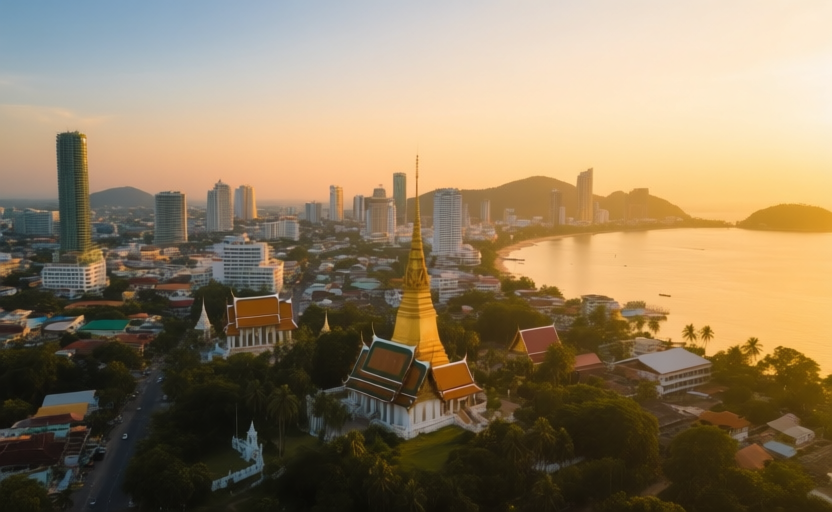
Thailand · Southeast Asia
Moving to Phuket
Phuket quick facts
Thailand at a glance
East Asia & Pacific

Economy
World Bank · 2025Religion
% of populationCIA World Factbook / national censuses
Cost of living in Phuket
Can you move to Thailand?
Pick your passport to see whether you can enter Thailand — and what it takes to stay.
Entry rules come from github.com/imorte/passport-index-data, updated 17 February 2026. They change without notice — confirm with the official immigration service before booking.
Getting set up in Thailand
Long-stay visas & immigration reporting
Four routes cover almost everyone in Phuket. The DTV is the low-cost remote-worker visa. The BOI's Long-Term Resident visa is the premium route and the only one that carries a tax advantage. Thailand Privilege is a paid membership that buys a long-stay visa outright with no income or employment test. Retirement extensions cover the over-fifties. Whatever you hold, two ongoing duties apply and they belong to different people: the TM30 address notification is your landlord's or accommodation operator's legal duty, and the TM47 90-day report is yours.
Read the full step-by-step guideGetting around & the motorbike question
Phuket's transport is its weakest point and its biggest health risk. Songthaews run fixed routes on their own schedule, metered taxis are not the norm, and the local transport trade has long resisted ride-hailing, so Grab availability varies by area and time. Most foreigners rent or buy a motorbike, and motorbike injuries are the leading cause of serious harm to foreigners here. The licensing and insurance consequences of riding without a proper licence are the part people discover in hospital.
Read the full step-by-step guideOpening a Thai bank account
Bring a passport, a long-stay visa or extension, and a certificate of residence or other proof you actually live here. Which branch you walk into matters more than which bank, and Phuket's larger mall and town branches are generally the most workable. Once open, the account matters mainly for PromptPay, which is how Thailand actually pays for things, and — if you are buying property — for the foreign exchange transaction record that a condominium purchase requires.
Read the full step-by-step guideHealthcare & health insurance
Phuket is unusual among resort destinations in having internationally accredited private hospitals with English-speaking specialists, alongside a government hospital in Phuket Town. That means you can get serious treatment without leaving the island. It does not mean cheap: private care is billed to you and settled on discharge. Given that the most likely reason you will need it is a motorbike accident, the inpatient limit on your policy is the number that matters.
Read the full step-by-step guideSIM card & home internet
Buy a SIM from an official AIS, True or dtac store with your original passport; registration involves a facial-recognition check and takes minutes. Always add a data package rather than running on raw credit. For home internet, the important question is not which provider is best but what physically reaches the property — a villa down an unmade lane in Thalang and a condominium in Kathu are completely different propositions.
Read the full step-by-step guideTax residency, remitted income & property
You become a Thai tax resident at 180 days in a calendar year — 180, not the 183 used in many other countries. Residency is what brings remitted foreign income into scope under Revenue Department orders Por. 161/2566 and Por. 162/2566, which since 1 January 2024 make foreign income earned while resident assessable whenever you bring it in. Phuket adds a property dimension: what you can lawfully own, and the transfer taxes on the way in and out.
Read the full step-by-step guideEach guide has verified costs, timelines, required documents, and the non-obvious gotchas — sourced from official government pages. Last verified August 2026.
Essential Thai phrases
Reading a list isn’t learning it. Globe Quest turns these into a trainer — hear each phrase spoken, drill them with spaced repetition, and get scored as you say them out loud.
What to know before you go
Red flags on the west-coast beaches are lethal, not decorative
CriticalFrom roughly May to October the monsoon drives powerful rip currents onto Phuket's west coast — Patong, Kata, Karon, Nai Harn, Surin. Red flags are posted when the water is closed, and people drown every season having decided the sea looked calm. Rip currents are not visible from the sand. If you are caught in one, do not swim against it; swim parallel to the beach until you are out of the pull, then come in. Learn which beaches have lifeguards and swim at those.
Rent on a twelve-month lease, not a seasonal one
CriticalPhuket's rental market runs on a tourist cycle: high season roughly November to April, low season May to October. Short and seasonal lets are priced several times higher in high season, and the same villa can be advertised at wildly different rates depending on the month you ask. A twelve-month residential lease is priced quite differently from a holiday let and is dramatically cheaper. If you are staying a year, say so from the first conversation — you are in a different market to the one the listing sites show.
You cannot own land, and the workaround people sell you is illegal
CriticalForeigners cannot own land in Thailand. The two lawful routes are a condominium unit inside the building's foreign quota, and a registered lease of up to thirty years. What is widely marketed in Phuket instead — a Thai company set up with nominee shareholders whose only purpose is to hold land for a foreigner — is unlawful under Thai law and exposes you to loss of the asset. Take independent Thai legal advice from a lawyer you found yourself, not one introduced by the seller or the agent.
Water is a real constraint outside the main supply areas
ImportantThe island depends on a small number of reservoirs, and villa developments away from the mains are commonly supplied by private tanker. In a dry year the supply gets tight before the rains return and deliveries get expensive and slow. Before you take a villa, ask specifically: is it on municipal mains or tanker, how big is the storage tank, and what happened last dry season. This is not a theoretical risk here.
Getting around is the island's genuine weak point
CriticalThere is no rail, no comprehensive bus network and a long-standing local transport trade that has resisted ride-hailing. Grab operates but availability and reception vary by area, songthaews run fixed routes on their own timetable, and metered taxis are not the norm. Most residents ride a motorbike, which is also how most foreigners here get hurt. If you ride, wear a proper helmet, get a licence that your insurer will accept, and check your policy actually covers motorcycles.
The island has real hospitals, which is unusual for a resort
ImportantPhuket supports internationally accredited private hospitals with English-speaking specialists, plus a government hospital in Phuket Town. That is a genuine advantage over most island destinations, and it is why a lot of people who could live anywhere in Thailand choose here. It does not make care cheap — private treatment is billed to you and settled on discharge — so cover with a serious inpatient limit is the point, not a formality.
Top industries & employers
Tourism & hospitality
International hotel groups, resorts, villa operators, dive schools
The dominant industry by a wide margin, and a seasonal one. Employment, traffic and prices all breathe on the November-to-April cycle.
Property development & villa management
Local developers, villa rental managers, agencies
A large market built around foreign buyers who cannot own land — which is why the legal structuring around leases and condominium quotas is such a live topic here.
Health, wellness & medical travel
Bangkok Hospital Phuket, Siriroj International, wellness and rehabilitation retreats
Internationally accredited private hospitals plus a substantial wellness industry. Unusual depth of medical infrastructure for an island of this size.
Marine, yachting & marinas
Phuket's marinas, charter operators, refit and brokerage yards
Phuket is Southeast Asia's main yachting hub, with a real skills market in marine engineering, chartering and crewing.
Remote work & the digital-nomad economy
Coworking spaces in Rawai, Chalong and Cherngtalay; independent founders and freelancers
The DTV made a long stay straightforward and a substantial remote-work community has settled on the south and west of the island, distinct from the tourist strip.
Education & international schools
Several established international schools across the island
A large expatriate family population supports more international schooling than the resident population alone would, concentrated around Cherngtalay and Thalang.
Where to go in Phuket
Old Phuket Town
Culture · Phuket City
Sino-Portuguese shophouses in ice-cream colours along Thalang and Dibuk roads — the island's actual town, and nothing like the beach strip.
Local tip: Come on a Sunday evening for the walking street, or a weekday morning for the coffee shops. This is where island residents live rather than visit.
Nai Harn & Promthep Cape
Nature · Southern Phuket
A near-perfect crescent bay backed by a lake, with the island's most-photographed sunset headland a few minutes away.
Local tip: Nai Harn keeps its lifeguards and its flags taken seriously. Promthep is packed at sunset — the viewpoint just north of it is nearly as good and nearly empty.
Patong & Bangla Road
Nightlife · West coast
The island's tourism engine — a dense strip of bars, clubs and beach clubs that runs at full volume every night of high season.
Local tip: Useful to know and unpleasant to live in. Most long-term residents visit Patong occasionally and would not consider renting there.
Big Buddha (Phra Phutthamingmongkhon)
Landmark · Nakkerd Hills, Chalong
A 45-metre marble Buddha on a ridge with a view over Chalong Bay, Kata and half the island.
Local tip: Go early morning for the light and the quiet. The road up is steep and narrow — a bad first ride if you have just rented a motorbike.
Ao Yon & Panwa Cape
Nature · Eastern Phuket
A calm east-coast bay with mangroves and an aquarium, sheltered when the west coast is closed by monsoon swell.
Local tip: This is where locals swim during the monsoon months. When the west side has red flags out, the east coast is usually flat and safe.
Ban Bang Rong & the eastern mangroves
Hidden gemFood · Thalang, northeast Phuket
A working Muslim fishing village with a mangrove boardwalk and seafood restaurants over the water, an hour and a world away from Patong.
Local tip: Go for a late lunch on a weekday. Almost no visitors make it here and the seafood is priced for the people who caught it.
Emergency numbers in Phuket
Compare Phuket with…
Side-by-side cost of living, language, climate and careers — to help you choose.